Clayton Railcars
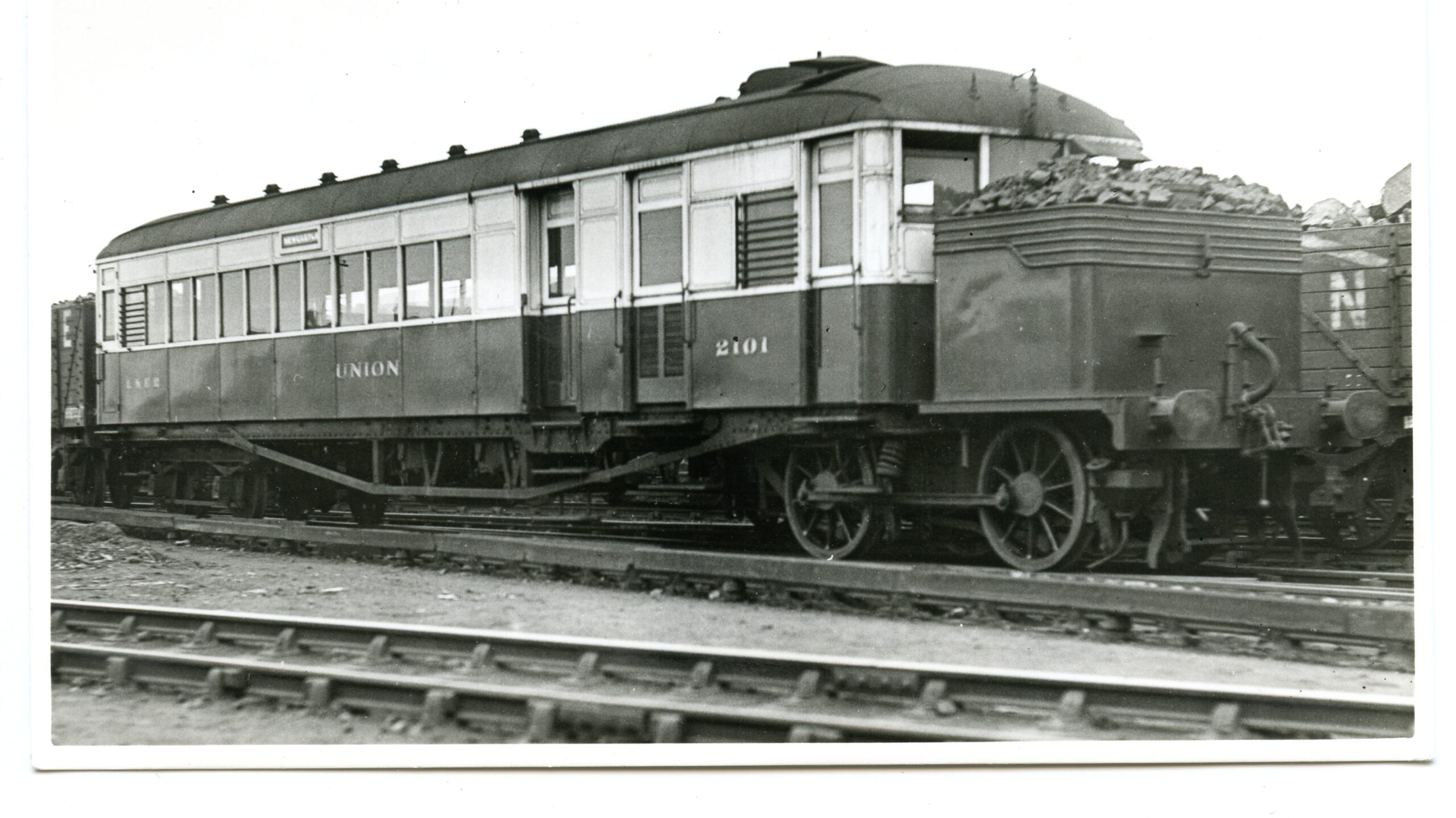
The LNER purchased eleven steam railcars from Clayton Wagons Ltd between 1927 and 1928, designed for branch line services.
Clayton Wagons Ltd of Lincoln began building steam railcars in 1927. The LNER under Gresley initially purchased eleven units between 1927 and 1928.
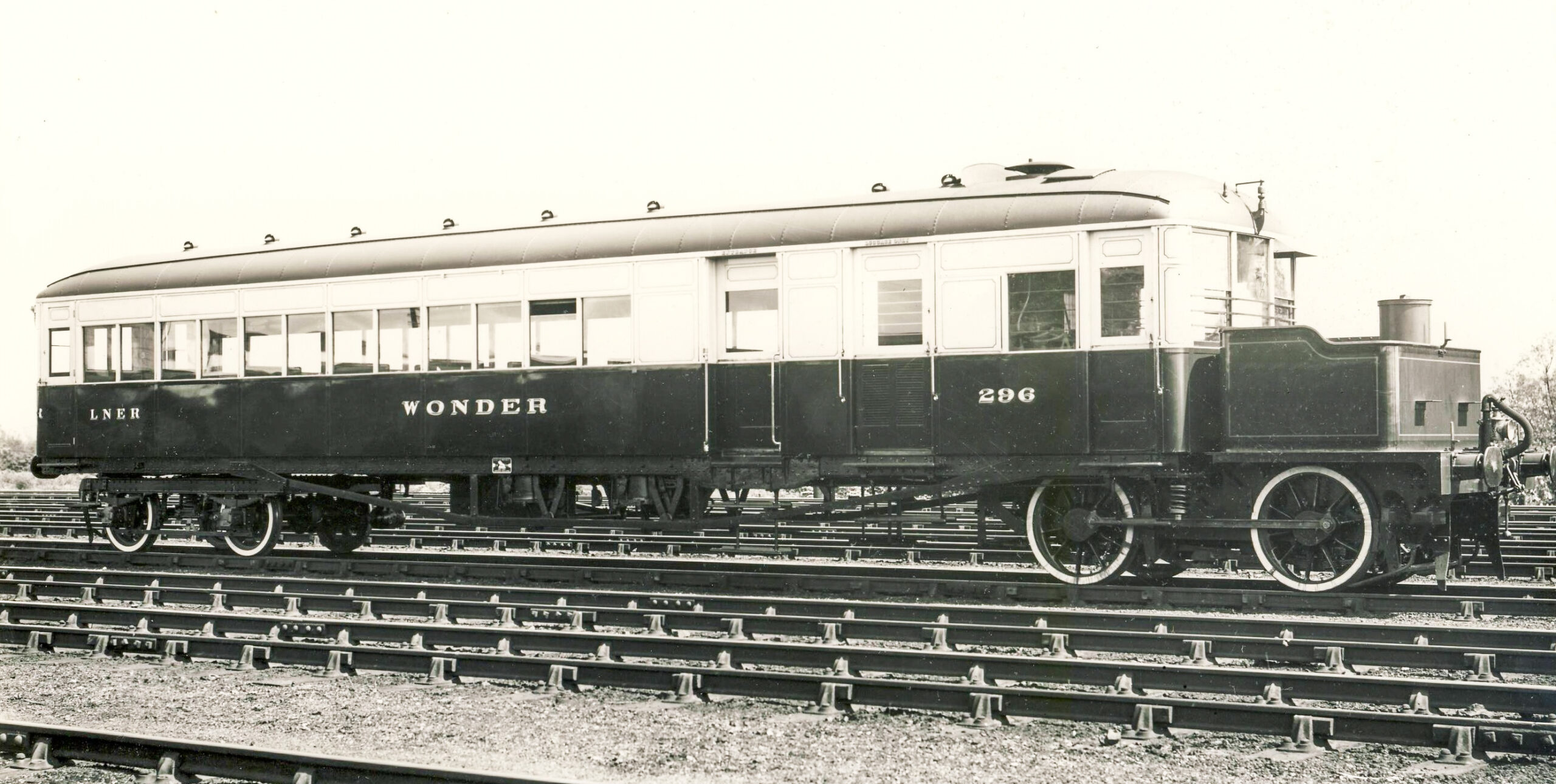
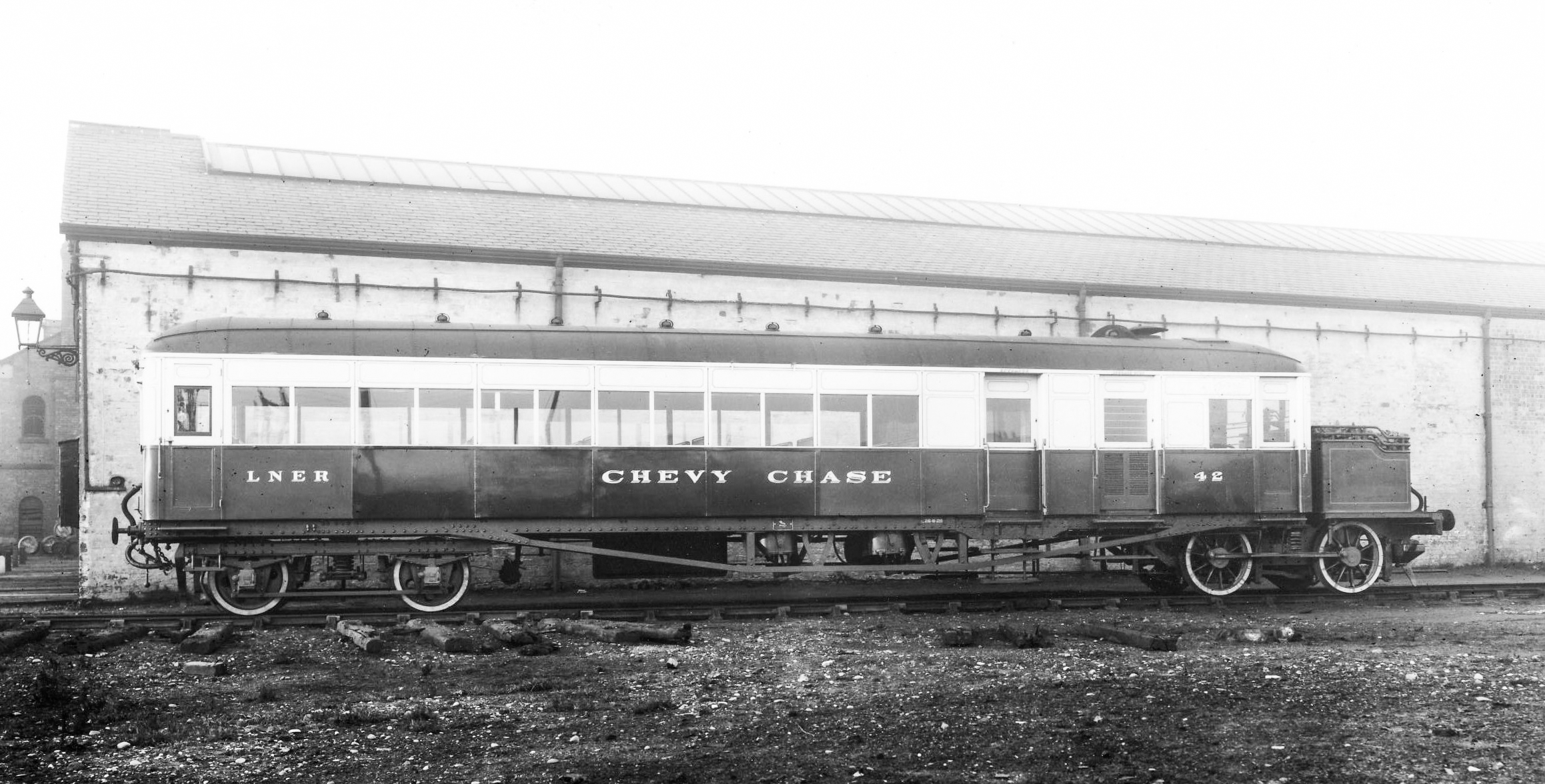
The Clayton Railcars were similar in concept to Sentinel Steam Railcars but had distinct features, including a separate coal bunker and water tank mounted on the power bogie in front of the coach body, a vertical boiler with 72 water tubes, and two-cylinder piston valve engines with drive via a spur gear on the driving axle.
The first railcar, numbered No. 41 Pilot, was delivered in July 1927 for trials. The subsequent production series included 10 railcars with slight modifications: Diagram 92 raised seating capacity to 64 passengers, while Diagram 94 (No. 2130 Bang Up) featured a central gangway with 2+2 seating, reducing capacity to 44 passengers.

The railcars had vertical type boilers, cylindrical shell with square cross-section firebox, containing 72 water tubes and operating at 275 psi. They had two high-pressure cylinders, 6.75 x 10 inches, piston valves, totally enclosed, gear-driven transmission and a power bogie with coupled axles; front bogie 3ft 6in, rear 3ft.
Initially, Clayton Railcars were allocated throughout the North Eastern Area, including York-Scarborough-Whitby routes, and later in Norwich, Lincoln, Doncaster, Lowestoft, and Hitchin. They were primarily used for short-mileage branch line services. Reports from the mid-1930s cited poor reliability, leading to the first withdrawal in July 1932 (Rapid) and final withdrawals between April 1936 and February 1937. Mileage ranged from 72,774 (Rapid) to 174,691 (Chevy Chase) .
The LNER also purchased eight four-wheel trailers for use with Clayton Railcars, featuring 40ft 9in bodies, 26ft wheelbase, and accommodation for 40 seated passengers with room for standing or tip-up seats. Most trailers were withdrawn by 1949, although some were repurposed for departmental use or even as summerhouses.
Compared to Sentinel-Cammell Railcars, Clayton units were distinctive in their gear-driven engine under a vertical boiler, external coal and water bunkers, and coupled power bogies. Despite sharing basic principles with other vertical-boilered steam railcars of the era, Clayton Railcars suffered from more significant maintenance and operational issues.
The Clayton Railcars were a notable example of LNER’s attempts in the late 1920s to reduce branch line operating costs through steam railcars. While innovative in design, frequent mechanical failures and operational limitations meant all units were withdrawn within a decade, leaving no preserved examples.