Class 306 EMUs
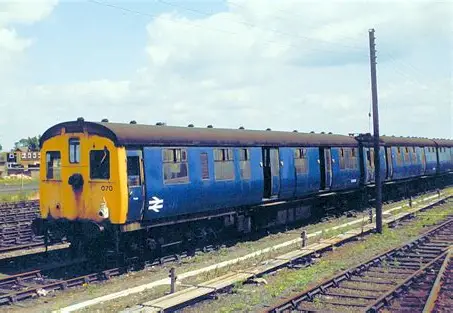
The LNER class 306 was a fleet of 92 three-car electric multiple units (EMUs) built in 1949 but ordered by Sir Nigel Gresley in the 1930s.
The LNER class 306 was a fleet of 92 three-car electric multiple units (EMUs) built in 1949, originally for the Liverpool Street–Shenfield suburban line, serving commuters with DC and later AC electrification.

The class 306 EMUs were initiated by the London and North Eastern Railway (LNER) in the late 1930s as part of the suburban electrification plans for the Great Eastern Main Line, specifically between London Liverpool Street and Shenfield. Although ordered by Sir Nigel Gresley, construction was delayed by the Second World War, with full deliveries occurring in 1949 under British Railways.
The fleet was originally classified as AM6 stock and reclassified under the TOPS numbering system as class 306 in 1968. Each train consisted of three cars: a Driving Motor Brake Standard Open (DMBSO/DMSO), a Trailer Brake Second Open (TSO/TBSO), and a Driving Trailer Standard Open (DTSO), providing a total seating capacity per unit of around 170 passengers, with additional standing room.
The class 306 units were produced by Metro Cammell and Birmingham Railway Carriage and Wagon Company. The trains had steel bodies, a maximum speed of 75 mph (121 km/h), and operated initially on a 1,500 V DC overhead line, collecting power via a diamond-pattern pantograph on the DMBSO.
Traction was provided by four Crompton Parkinson motors with 210 hp each, giving a total output of 840 hp per unit. They were equipped with Thompson bogies, electro-pneumatic air brakes, and bi-parting sliding doors.
From 1959 to 1961, the units were rebuilt to use the 25 kV AC overhead line system (with 6.25 kV AC in inner London areas), including the fitting of transformers and rectifiers under the intermediate trailers and relocation of the pantograph to the roof of this carriage. These modifications allowed continued use on suburban AC lines while maintaining their original motor and control systems.
Class 306 trains primarily served the Shenfield–Liverpool Street route, with extensions to Chelmsford by 1956. Trains could be coupled in three-unit formations (nine cars) during peak hours, carrying over 1,200 passengers in total, while off-peak operations used two-unit formations. They were central in replacing steam locomotives like the LNER class N7 tank engines on the commuter services, offering faster, cleaner, and more frequent operations.
Withdrawals began sporadically in the late 1960s, mostly due to fires and accidents, with main withdrawals occurring 1980–1981 as newer EMUs like classes 302 and 305 replaced them. The Class 306 EMUs were pioneering suburban electric trains using post-war electrification technology, bridging the transition from LNER plans to modern British Railways suburban services.
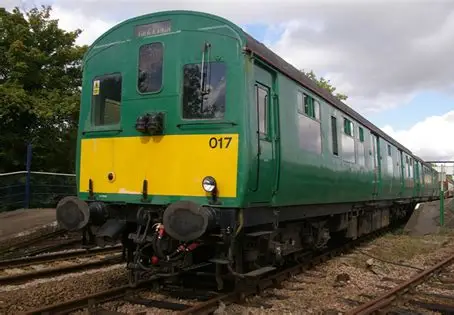
Unit No. 306017 survived into preservation, initially used for training and later restored to near-original green livery with a modern yellow warning panel. It has been housed at locations including the East Anglian Railway Museum and Locomotion in Shildon.
To find out more about the class 306s, visit wikipedia. Volume 10B of the RCTS ‘Locomotives of the LNER’ covers the class in detail.