Robinson class O4
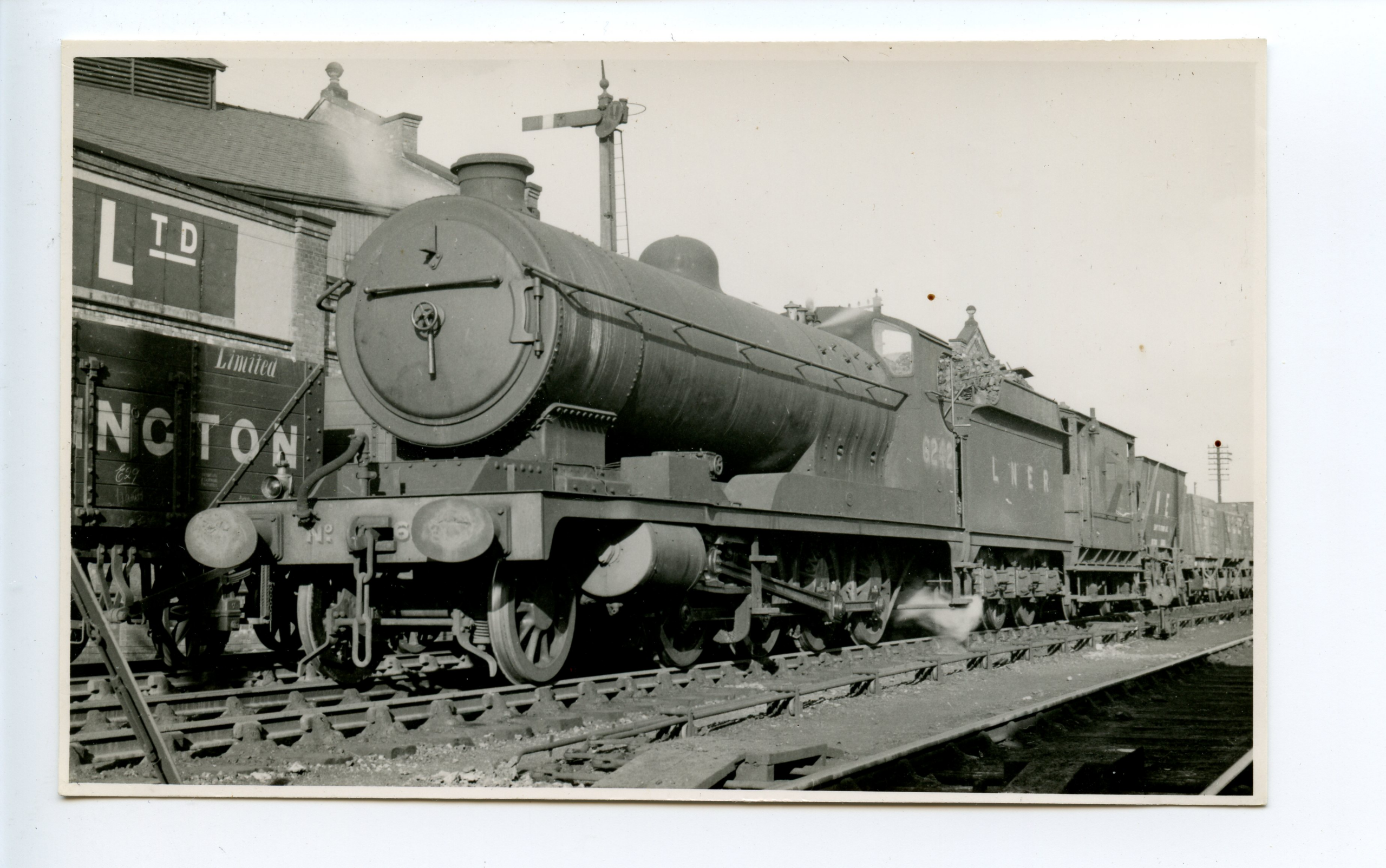
The Great Central Railway class 8K (LNER class O4) is a highly successful 2-8-0 heavy freight steam locomotive designed by John G Robinson and introduced in 1911.
The LNER class O4, originally the GCR Class 8K, was a highly successful 2-8-0 heavy freight steam locomotive designed by John G. Robinson, serving both British domestic freight and wartime supply lines.
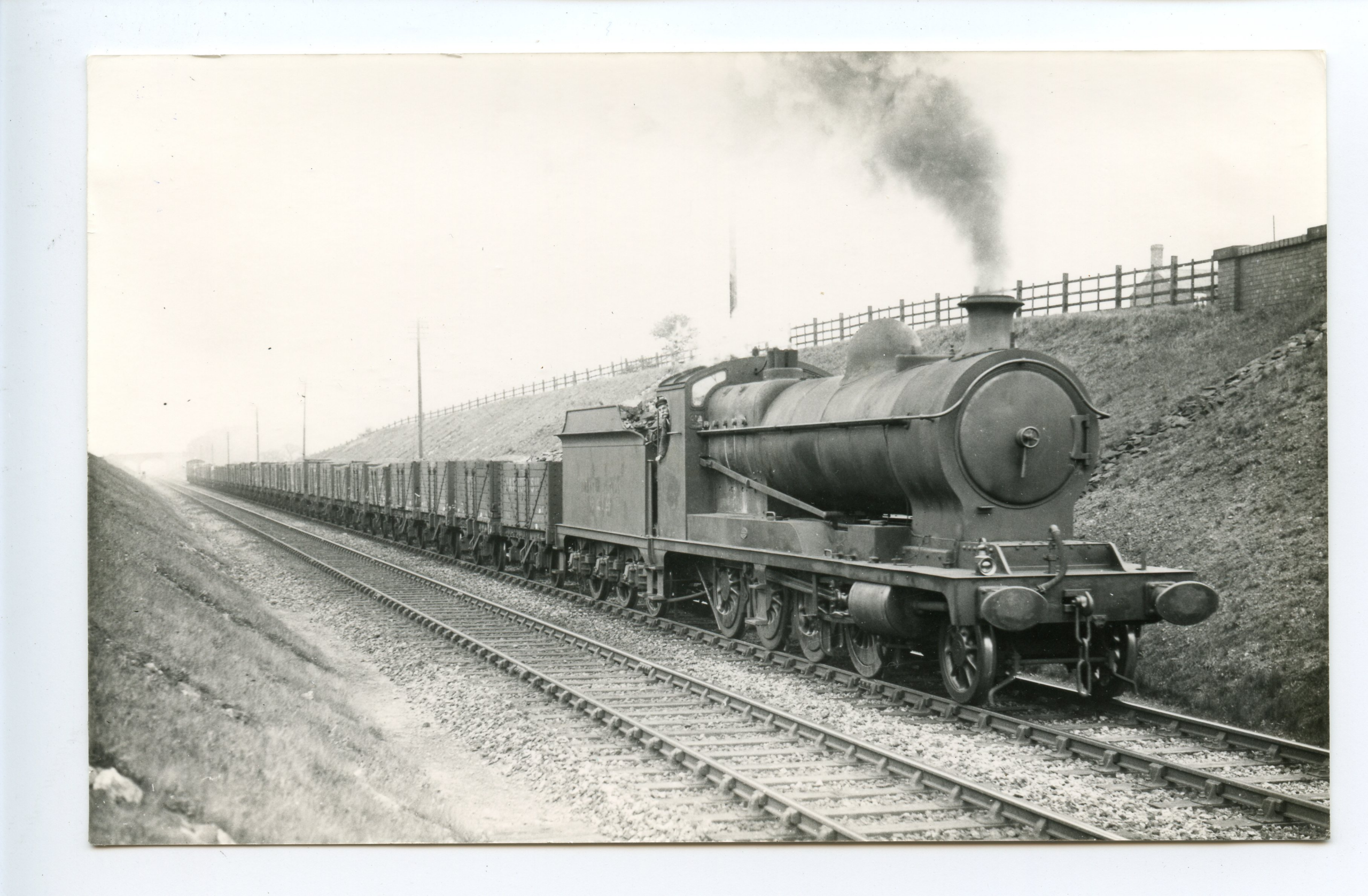

Designed in 1911 by John G. Robinson for the Great Central Railway (GCR), the Class 8K locomotives were intended for hauling heavy coal trains to the newly developed Immingham Docks. They featured a 2-8-0 wheel arrangement, with a leading bogie of 3 ft 6 in wheels and eight driving wheels of 4 ft 8 in diameter, providing stability and traction across poor quality mineral lines.
The design incorporated two outside cylinders (21 in × 26 in), Stephenson valve gear, piston valves, and a Belpaire firebox to enhance efficiency. Early examples used an 18-element Robinson superheater, later standardised to 22–24 elements.
Initial production ran from 1911 to 1918 at GCR Gorton Works, with 131 locomotives becoming part of the LNER fleet during the 1923 railway grouping.
During World War I, the Railway Operating Division (ROD) ordered 521 additional locomotives based on the 8K design for use in France. After the war, many surplus ROD locomotives were sold or loaned to British railways, with LNER purchasing 273 between 1923 and 1927, expanding its fleet to 405 locomotives.
The GCR Class 8M (class O5) locomotives were gradually rebuilt into class O4 standards during the 1920s and 1930s. During World War II, 92 class O4s were requisitioned for Middle East operations, with some later sold for use in Egypt and other overseas locations.
LNER created eight sub-classes (classes O4/1 to O4/8) reflecting variations in boilers, cabs, valve gear, and rebuilds:
O4/1: Original GCR design with Belpaire firebox, water scoop, steam and vacuum brakes, introduced 1911.
O4/2: Similar to O4/3 with reduced cabs.
O4/3: Ex-ROD locomotives with steam brake only, no scoop.
O4/4, Rebuilt with O2 boiler, extended rear frames and side window cab, since rebuilt again.
O4/5, Rebuilt with shortened O2-type boiler (Diagram 15A). Retained GCR style cab
O4/6, Introduced 1924. Rebuilt from class O5 retaining higher cab. 63914-20 with side windows. All cabs eventually reduced in height.
O4/7, Introduced 1939. Rebuilt with shortened O2-type boiler (Diagram 15D), retaining GCR smokebox.
O4/8, Introduced 1944. Rebuilt with B1 boiler (Diagram 100A) and B1 style side window cab.
In 1944, 58 class O4s were rebuilt with 100A boiler, Walschaerts valve gear and new cylinders at Gorton Works, then classified as Thompson class O1s.
The class O4s were primarily employed on heavy freight duties across the LNER network. Key allocations included Gorton, Mexborough, Annesley, Retford, Staveley, Sheffield, and Immingham. They earned the nickname “Tinies” for their compact but capable build.
After nationalisation in 1948, 329 class O4s continued in British Railways service across Eastern and North Eastern regions. Withdrawals started in December 1958, with the last examples retired by April 1966.
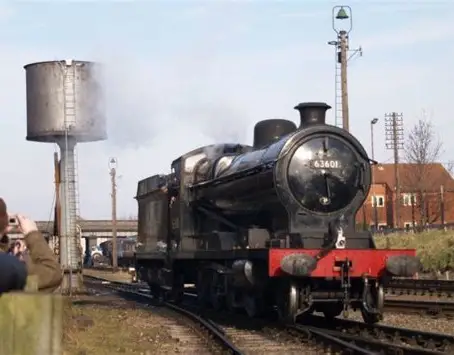
One class O4/1, GCR No. 102 (LNER No. 5102, BR No. 63601), is preserved as part of the National Collection at the Great Central Railway at Loughborough and returned to steam in 2000. It is currently under overhaul again with a planned completion in 2027.
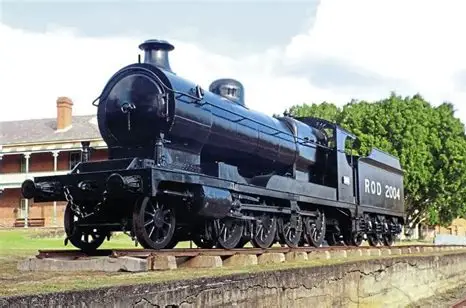
Three further ex-ROD class O4s in Australia, J&A Brown No. 20 (Ex-ROD No. 1984, North British No. 22042) and J&A Brown No. 24 (Ex-ROD No. 2003, Gorton) at the Dorrigo Steam Railway & Museum and J&A Brown No. 21 (Ex-ROD No. 1615, Kitson & Company), at the Richmond Vale Railway Museum, disguised as sister locomotive No. 23 (ROD No. 2004), all in static condition.